Vape Delivery in Singapore Costs More Than It Should: What You Actually Get
Most guides to vape delivery in Singapore talk about speed. They promise you a rider in under an hour, a tracking link, a discreet parcel. What almost none of them talk about is what the whole thing actually costs you once you add up the product, the delivery fee, the minimum order, and the risk of ending up with something that is not what was advertised. That is the part people keep asking about in community threads, and it is the part worth answering properly.
If you have spent any time looking for Sg vape shop delivery, you already know the search results are a mix of listings that look identical and prices that do not. The question is not whether delivery exists. It clearly does. The question is whether the price you pay matches the value you receive, and how to tell the difference before you commit.
This is a moderator-style breakdown for anyone who keeps asking the same question in the group chat: is it worth it, and what am I actually getting for the money?
What the Price Tag Actually Includes
When a shop quotes you a delivered price, you are paying for at least four separate things, whether or not they are itemised. The product itself is the obvious one. Then there is the delivery fee, which varies wildly depending on distance and timing. Then there is the cost of holding local stock, because a shop that keeps inventory on hand in Singapore has already paid to import, store, and manage it. And finally there is the cost of trust: packaging, handling, and the operational overhead that separates a shop with an actual address from a Telegram handle that disappears after one bad week.
Cheap delivery usually means one of those four has been cut. Sometimes it is the packaging, which is fine. Sometimes it is the stock authenticity, which is not. The trick is figuring out which corner is being cut before you hand over payment.
A shop that runs a proper Singapore vape delivery operation will usually be transparent about the split. You will see a product price, a delivery window, and a minimum order threshold. That transparency is itself a signal. It means the business is structured enough to quote you a real number rather than a number that changes once you are already in the chat.
What you should be sceptical of is the flat, too-good-to-be-true delivered price with no breakdown at all. In practice, that price is either subsidised by volume the shop does not actually have, or it is a bait figure that gets revised once the rider is already on the way. Neither is a good deal, no matter how attractive the headline number looks.
Comparing the Real Options Side by Side
Rather than a table of logos, it helps to compare the actual value propositions in plain prose, because that is how the decision gets made in real life.
Option one: the big marketplace listing. You get a wide catalogue, occasional discounts, and a delivery estimate that is often optimistic. The trade-off is that you rarely know who is actually packing your order, and stock levels shown online do not always match reality. When something goes wrong, you are dealing with a platform process rather than a person. For a one-off purchase, that can be fine. For a repeat order, it gets tiring.
Option two: the informal chat-based seller. Often the cheapest headline price, sometimes genuinely good, and frequently inconsistent. Stock comes and goes. Packaging is whatever envelope is nearby. Payment is a transfer with no receipt worth keeping. You are essentially betting on the seller’s reliability, and that bet does not always pay off. The value here is real when it works, but the variance is high.
Option three: the dedicated local retailer with its own delivery. This is where a service like lana vape sg sits. You pay a little more than the cheapest chat seller, but what you get in return is local stock that is actually on the shelf, a defined delivery window, and packaging that does not announce its contents to everyone in the lift lobby. The premium is essentially an insurance policy on authenticity and timing.
Option four: ordering from overseas. Usually the lowest unit price, almost always the longest wait, and the most unpredictable outcome. Customs, shipping delays, and the fact that you cannot inspect anything until it arrives all push the real cost up. For most people reading this, it is not a serious contender for a routine purchase. It only makes sense for bulk orders where the per-unit saving is large enough to absorb the risk. Singapore lana vape
Laid out like that, the comparison is less about price and more about what you are buying alongside the product. The marketplace sells you convenience. The chat seller sells you a low number. The local retailer sells you certainty. The overseas seller sells you a discount in exchange for patience and risk.
Most repeat buyers eventually land on the local retailer option, not because it is the cheapest, but because it is the one where the delivered price is closest to the true cost. There are no surprise revisions, no waiting a week, and no guessing whether the device is genuine.
Where the Money Actually Goes, and Where It Should
It is worth being specific about the value you should expect when you pay for Vape delivery sg from a properly run local shop.
Authentic stock. This is the single biggest component of value and the hardest to verify from a listing. A shop that holds its own inventory can tell you exactly what batch it has and when it arrived. That matters because disposable devices are not all identical, and a counterfeit unit can taste wrong, leak, or fail early. When you pay a small premium for a local retailer, a meaningful chunk of that premium is buying the assurance that the product is what it claims to be. Brands like Elf Bar are widely imitated, so the assurance is not trivial.
Same-day availability. A Lana vape same day delivery window is worth real money to anyone who has run out at an inconvenient moment. The value is not just speed for its own sake. It is the fact that the shop has already absorbed the cost of holding stock locally so that you do not have to plan a week ahead. You are paying for someone else to carry the inventory risk.
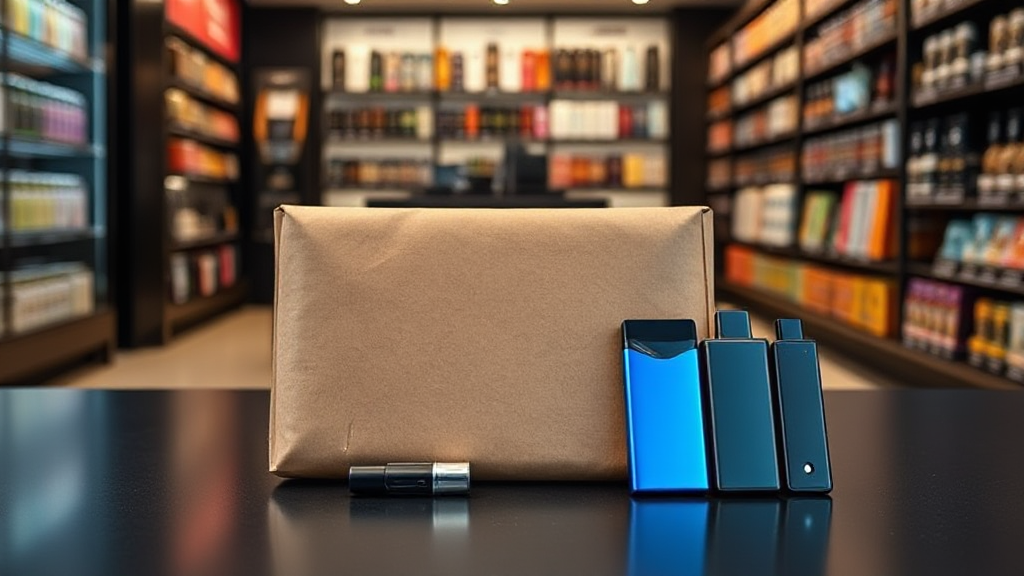
Discreet packaging. This is often treated as a nice-to-have, but it is genuinely part of what you pay for. A parcel that arrives in plain packaging, with no external branding and no rattling contents, is a product of deliberate operational choices. That costs the shop money. It is also the reason many people prefer a dedicated local service over a generic courier arrangement.
A delivery window you can plan around. Vague promises like “within the day” are worth less than a defined slot. A shop that can give you a realistic window is one that knows its own rider capacity and its own stock position. That knowledge is operational maturity, and it is priced in.
What you should not be paying for is mystery. If a shop cannot tell you where the product came from, when it will arrive beyond a vague estimate, or how it will be packaged, then the premium is not buying you anything. You are just paying more for the same uncertainty you would get from a chat seller.
The practical test is simple. Before you order, ask three questions: is the stock local, what is the realistic delivery window, and how is it packaged? A shop that answers all three clearly is worth the premium. A shop that deflects is not, regardless of how good the price looks.
There is also a value question around repeat purchases. A shop that keeps a consistent catalogue and consistent pricing is easier to build a routine around than one where the stock rotates unpredictably. If you find yourself re-ordering the same device every few weeks, the value of a stable local supplier compounds. You stop spending time comparing listings and start just placing the order. That saved time is a real, if invisible, part of the return.
One more consideration that rarely gets mentioned: payment and receipt. A local retailer with a proper operation gives you a record of what you bought and when. In the rare case that something is wrong with the device, that record is what makes a replacement conversation possible. With an informal seller, there is often nothing to point to. The value of that record is small per transaction but significant when you actually need it.
What to Do With All This
If you are the kind of buyer who orders once in a while and does not mind waiting, the marketplace route is perfectly reasonable. If you enjoy the hunt and are willing to accept the variance, the chat-based sellers can work. If you are ordering in bulk and can tolerate the wait, overseas has its place.
But if you are ordering regularly, want to know what you are getting, and value your time, the honest recommendation is to pick a local retailer with its own delivery operation and stick with it. The delivered price will not be the lowest number you see. It will, however, be the closest to the true cost, because it includes the things the cheap options quietly leave out: authentic stock, a real delivery window, and packaging that respects your privacy.
That is the answer to the question people keep asking. The cheapest delivery is rarely the best value, and the best value is rarely the cheapest. Once you start pricing in authenticity, timing, and discretion, the gap between the options narrows considerably, and the local option usually wins on what actually matters.
